


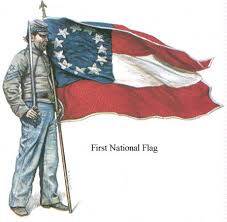
The Hard-Core Confederates Organization is a
informal independent fraternity that's dedicated in
promoting the preservation of Southern Heritage
and community charitable awareness. We believe.
our Confederate ancestors fought and died for a
just cause, not one that's been tarnished by
political correctness and cultural bigotry against
the South. We're not a hate, Neo - Nazi, or white
supremacist organization, just proud of being heirs.
of the Confederacy. Patriotic fellowship is
emphasized as our cause is just and honorable.
We invite all Southern born men from the age of
18 and/or those who can prove a blood line to the
Confederate States of America military. We honor
the Southern way of life and invite you to join us.
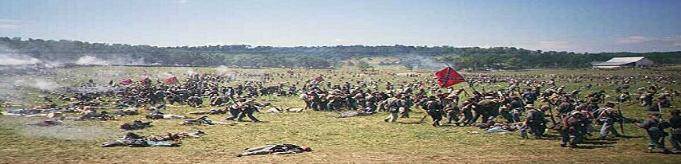
Brigadier General
Robert Bullock,
Camp 301, Florida

Brigadier General Robert Bullock was an American state legislator and a United States representative from Florida. He was born on December 8, 1828, in Greenville, North Carolina and died on July 27, 1905, in Ocala, Florida. During the American Civil War, he served as a brigadier general in the Confederate States Army. He entered the Confederate Army as captain in the 7th Florida Infantry in 1861 and served until the close of the War. He was promoted to lieutenant colonel in 1863 and to brigadier general in 1865 . Bullock took part in the Battle of Chickamauga, the Atlanta Campaign, and the Franklin-Nashville Campaign, where he was severely wounded. After the war, he studied law and was admitted to the bar in 1866 and began practice in Marion County. He served as judge of probate court 1866-1868 and was a member of the Florida House of Representatives in 1879. He was again clerk of the circuit court of Marion County from 1881 to 1889. He was elected as a Democrat to the Fifty-first and Fifty-second Congresses (March 4, 1889 – March 3, 1893). After leaving Congress, he engaged in agricultural pursuits. He was elected judge of Marion County in 1903 and served until his death in Ocala, Florida in 1905. He is buried in Evergreen Cemetery.
